


India’s Digital Advertising Surge: Market Set to Touch $22 Billion by 2030
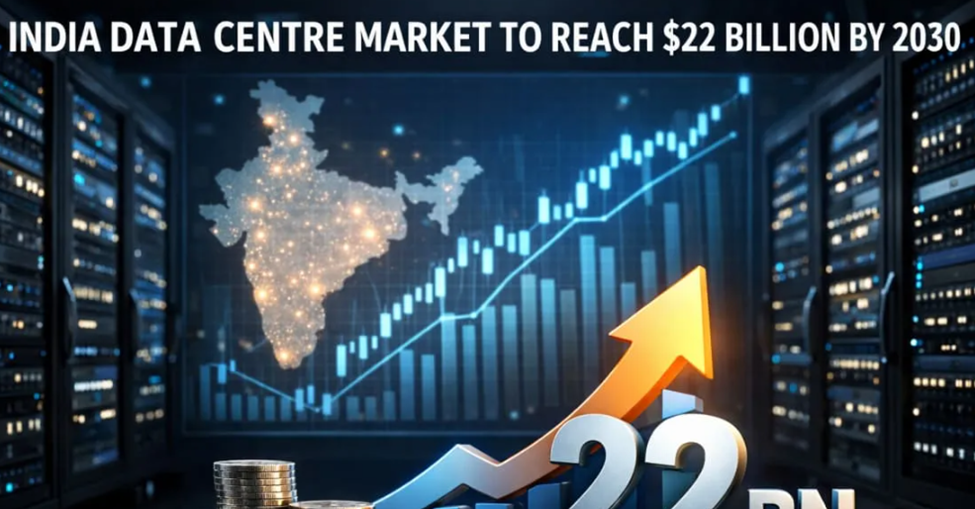
India’s digital ad market may nearly double to USD 19–22 billion by 2030, growing at 10–15% CAGR.
Digital ads form 70–75% of global ad spend in 2025; global market to exceed USD 1.2 trillion by 2030.
US (46%) and China (24%) lead; India holds ~1% share.
Mobile dominates (65%+), with in-app ads driving growth.
AI, privacy focus, and first-party data will define future winners.
India’s digital advertising landscape is on course for a dramatic expansion, with spending expected to nearly double over the next five years. A recent analysis by Redseer Consulting estimates that the country’s digital ad market, currently valued at about USD 11 billion in 2025, could grow to between USD 19 billion and USD 22 billion by 2030.
The projected rise reflects a compound annual growth rate of 10–15 percent, signaling sustained momentum in the sector. Redseer’s senior consultant, Madhav Gulati, noted that digital advertising is expanding significantly faster than the broader economy. Globally, digital formats are expected to represent 70–75 percent of overall advertising expenditure in 2025, growing at a pace three to five times higher than global real GDP.
On the global stage, the United States continues to dominate digital advertising, commanding roughly 46 percent of total spend in 2025. China follows with approximately 24 percent. India’s contribution, while still modest at around 1 percent, is poised to expand as businesses increasingly shift budgets toward online platforms. Worldwide, digital advertising outlays are forecast to exceed USD 1.2 trillion by 2030, underscoring the scale of the transformation underway.
Mobile platforms remain central to this evolution. More than 65 percent of digital advertising expenditure is directed toward mobile channels. Within that segment, in-app advertising has emerged as a particularly powerful driver, accounting for as much as 80–85 percent of mobile ad spending in markets such as the United States and expanding faster than the broader mobile category.
The ecosystem itself is heavily influenced by major technology firms. Companies such as Alphabet, Meta, Amazon, Apple, and ByteDance operate so-called “walled garden” environments, collectively capturing around 70–80 percent of global programmatic digital ad spending. Meanwhile, the open digital advertising ecosystem—including platforms like InMobi, Unity Ads, and OpenX—represents the remaining 20–30 percent, enabling brands to transact programmatically with a wider array of publishers via intermediaries.
Looking ahead, Redseer’s findings suggest that the next phase of digital advertising will be shaped by three defining forces: privacy-focused targeting strategies, AI-driven campaign management, and an increasing gap between early adopters of advanced technologies and those slower to adapt.
Success, according to the report, will depend on how effectively companies integrate artificial intelligence throughout their advertising infrastructure, strengthen first-party data capabilities, and reduce reliance on tightly controlled platform ecosystems. As competition intensifies and technology evolves, adaptability may prove to be the ultimate differentiator in India’s rapidly expanding digital ad market.


Comments