


China Accelerates Nuclear Ambitions with Capacity to Build 50 Reactors at Once
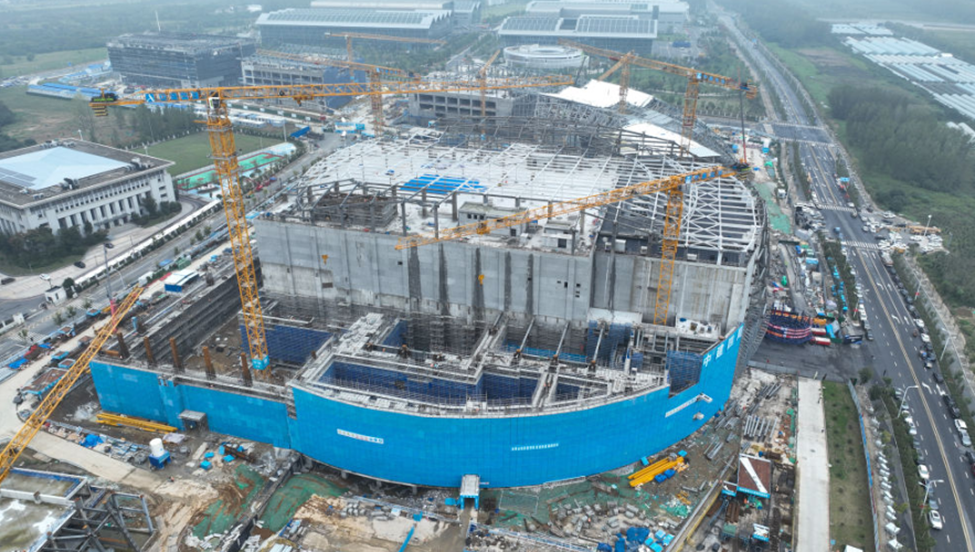
China can now build up to 50 nuclear reactors simultaneously, boosting global competitiveness.
Aims to surpass the US in nuclear capacity by 2030.
60 reactors operational; 36 under construction; 16 newly approved.
Capacity projected to reach 125GW soon and 200GW by 2040.
2025 investment rose to 161 billion yuan.
Expanding advanced Hualong One and next-generation reactor technologies.
China has revealed that it is now equipped to construct as many as 50 nuclear reactors at the same time, underscoring its determination to dramatically expand atomic energy production and secure a leading role in the global nuclear industry.
The milestone was detailed in a report issued Friday by the China Nuclear Energy Association (CNEA). According to the industry body, China has developed the capability to manage dozens of nuclear projects concurrently, overseeing every phase from initial design through construction and commissioning.
The report describes a significant evolution in the country’s technological standing. It notes that China has progressed from trailing more established nuclear powers to matching them — and in certain areas, setting the pace.
Strategic Push for Energy Security and Carbon Reduction
Beijing’s intensified focus on nuclear energy is part of a broader strategy to curb carbon emissions and reduce dependence on fossil fuels. The initiative has taken on added urgency amid heightened geopolitical tensions, including the ongoing conflict involving the United States, Israel, and Iran, which has reinforced concerns about energy security.
China has set a target of becoming a major nuclear power nation by 2030. By that time, it aims to overtake the United States in total installed nuclear capacity and rank as the world’s largest producer of nuclear-generated electricity.
At present, the country operates 60 commercial nuclear reactors, with another 36 under construction — accounting for more than half of all reactors currently being built worldwide. Authorities have also given the green light to 16 additional units. Once these projects are completed, China’s installed nuclear capacity is expected to reach 125 gigawatts (GW).
Looking further ahead, CNEA leadership projects that installed capacity could climb to 200GW by 2040, reflecting the scale of China’s long-term ambitions.
Rising Investment and Coastal Expansion
Financial backing for the sector has continued to grow. In 2025, investment in nuclear energy reached 161 billion yuan (approximately US$23.6 billion), representing a 9.6 per cent increase compared with the previous year.
Most new construction remains concentrated in coastal provinces, which serve as hubs for heavy industry and high electricity demand. These regions are seen as strategic locations for meeting rising energy needs while supporting economic output.
Advancing Domestic Reactor Technology
Technological development is also central to China’s nuclear strategy. The domestically designed Hualong One reactor — a third-generation pressurised water model — has entered what officials describe as a stage of standardized, large-scale deployment.
Currently, eight Hualong One units are operational, while 33 more have received approval for construction. The reactor design has become one of the most extensively deployed third-generation models globally, highlighting China’s growing influence in reactor technology.
In parallel, the country is advancing next-generation systems. Among them is the high-temperature gas-cooled reactor, considered a fourth-generation design. Capable of reaching core outlet temperatures between 700 and 1,000 degrees Celsius, this technology is expected to expand nuclear energy’s applications beyond electricity generation, particularly in providing industrial heat.
Expanding Nuclear’s Industrial Role
China is also exploring broader industrial uses for nuclear power. Pilot programs are underway to use reactors as a source of high-temperature steam for energy-intensive sectors such as petrochemicals. These initiatives aim to replace coal-fired boilers, further reducing carbon emissions in heavy industry.
Despite rapid expansion, nuclear power still accounted for 4.82 per cent of China’s total electricity generation last year, according to CNEA data. However, with dozens of reactors under construction and more in the pipeline, that share is poised to rise significantly in the coming decades.
Through sustained investment, technological innovation, and large-scale construction, China is positioning nuclear energy as a cornerstone of its future energy system — and as a platform for global leadership in the sector.


Comments