


India, China should see each other as partners: Chinese foreign minister

The two sides should follow the direction set by leaders and remove interference, the minister said. (Photo: Shutterstock)
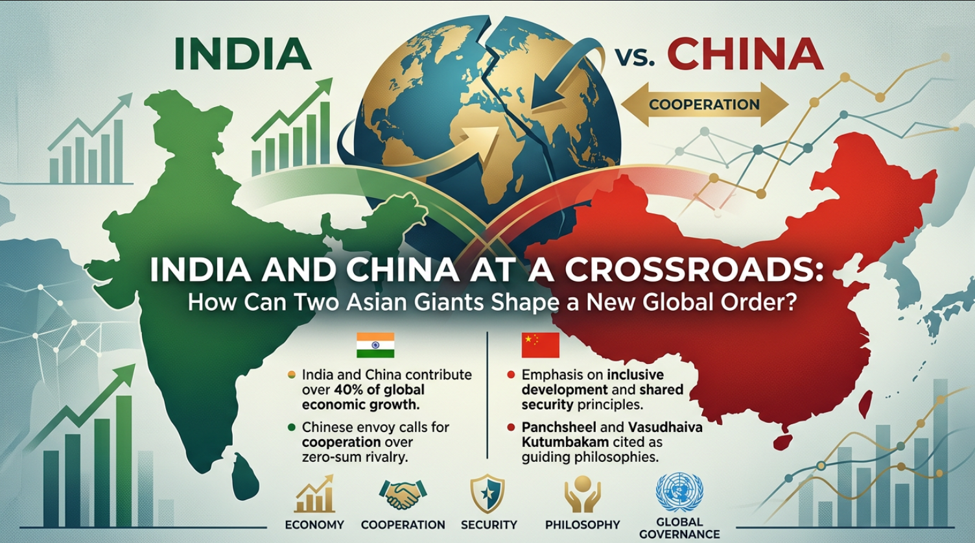
Wang Yi urges India and China to treat each other as partners, not competitors.
Recent Modi–Xi meetings in Kazan (2024) and Tianjin boosted diplomatic momentum.
Bilateral trade and people-to-people exchanges have reached new highs.
Emphasis on border peace, economic growth, and regional stability.
Call for cooperation within BRICS and broader Global South engagement.
Relations improving after years of Ladakh-related tensions.
Chinese Foreign Minister Wang Yi has urged Beijing and New Delhi to rethink how they view one another, advocating for a relationship defined by partnership rather than competition. Speaking on Sunday during his annual press briefing held alongside the ongoing session of China’s National People’s Congress (NPC), Wang emphasised the importance of cooperation over confrontation between the two Asian powers.
According to Wang, the trajectory for improved ties has already been outlined by Prime Minister Narendra Modi and President Xi Jinping. He noted that the leaders’ engagement in recent years has provided renewed direction for bilateral relations and should remain the guiding force moving forward, free from external disruptions.
Wang pointed to the meeting between Modi and Xi in Tianjin last August as a meaningful step in rebuilding trust. He said that progress achieved there built upon the momentum generated during their 2024 meeting in Kazan, Russia, describing the engagements as instrumental in stabilising and strengthening relations after a prolonged period of strain.
The foreign minister observed that exchanges between the two countries have regained energy across multiple sectors. He highlighted record levels of bilateral trade and an uptick in cultural and people-to-people interactions, suggesting that these developments have delivered practical gains for citizens in both nations.
Looking ahead, Wang stressed that the foundation of future engagement should rest on a balanced strategic outlook. He called on both sides to see each other as collaborators in development rather than adversaries. Emphasising shared responsibilities, he said maintaining peace and calm along the border areas must remain a priority, alongside a continued focus on economic growth and regional stability.
Describing China and India as significant neighbours and influential voices within the Global South, Wang underlined their deep civilisational connections and overlapping interests on global issues. He argued that cooperation between the two countries would contribute positively not only to their own progress but also to Asia’s broader resurgence. Conversely, he cautioned that discord could hinder regional aspirations.
Without specifying particular obstacles, Wang urged both sides to adhere to the direction set by their leaders and to minimise factors that might impede further progress.
He also called for mutual support within multilateral platforms, particularly BRICS. India is scheduled to host the grouping’s summit this year, while China will assume hosting responsibilities in 2027. Originally formed by Brazil, Russia, India, China and South Africa, BRICS has expanded in recent years to include Saudi Arabia, Egypt, the United Arab Emirates, Ethiopia, Indonesia and Iran, broadening its global footprint.
Relations between India and China had remained largely stagnant for five years following the military standoff in eastern Ladakh. However, diplomatic engagement resumed after the leaders met in Kazan in 2024 and later on the margins of the Shanghai Cooperation Organisation (SCO) summit in Tianjin. Since then, both sides have taken incremental steps to restore normalcy, including restarting visa processing and flight services, as well as launching initiatives aimed at rebuilding trust.
Wang’s remarks signal Beijing’s continued interest in consolidating these gains and steering the relationship toward sustained stability and cooperation.


Comments