


'China, India share far more common interests than differences': Chinese FM

Wang Yi highlights that shared interests outweigh differences in China-India ties.
Both sides aim to sustain improving relations amid global uncertainty.
China views India as a development partner, not a rival.
Greater cooperation urged in BRICS and Global South platforms.
Rawat stresses global significance of stable bilateral relations.
Vikram Doraiswami to succeed Rawat as India’s next ambassador to China.
Chinese Foreign Minister Wang Yi underscored the depth of shared interests between China and India during a meeting in Beijing with India’s outgoing Ambassador, Pradeep Kumar Rawat, signaling continued efforts to steady and strengthen bilateral ties.
The discussions, held on Thursday as Rawat concluded his diplomatic assignment in China, reflected a broader intention on both sides to maintain momentum in relations despite an evolving and uncertain global environment.
According to a statement released by China’s Ministry of Foreign Affairs, Wang acknowledged Rawat’s role in supporting the advancement of bilateral engagement during his tenure. He observed that, guided by the leadership of both countries, China-India relations have moved onto a constructive path of recovery and development.
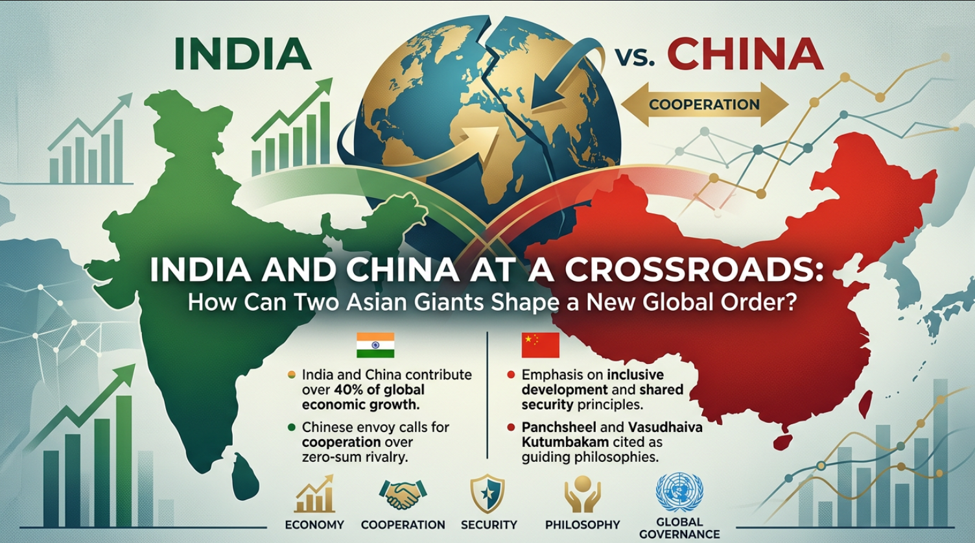
Wang reiterated Beijing’s willingness to translate the consensus reached by the two nations’ leaders into tangible progress. Framing the relationship within the context of shifting geopolitical realities, he stressed that China views India not as a strategic challenge but as a partner in development. As neighboring powers and prominent emerging economies, he said, the two countries possess overlapping interests that significantly outweigh their areas of disagreement.
He further argued that the global modernization process cannot be fully realized without the advancement of both China and India. In a period marked by turbulence and transformation in international affairs, Wang called for expanded practical cooperation across sectors, closer coordination in multilateral forums such as BRICS, and joint efforts to represent the priorities of the Global South. Consolidating the recent positive trajectory in bilateral relations, he added, should remain a shared objective.
Ambassador Rawat, who has served in Beijing since March 2022, expressed appreciation for the cooperation extended to him during his tenure. He noted that as two ancient civilizations and influential global actors, India and China have much to gain from maintaining steady and predictable ties. A stable relationship between the two, he suggested, carries implications that extend well beyond the region.
Rawat reaffirmed New Delhi’s readiness to expand high-level dialogue, deepen collaborative initiatives, and strengthen coordination in international platforms. He emphasized the importance of working together to promote global peace, stability, and sustainable development.
With Rawat’s term concluding at the end of this month, Vikram Doraiswami—currently India’s High Commissioner to the United Kingdom—is slated to take over as India’s next ambassador to China. The transition comes at a time when both governments are seeking to preserve recent gains and reinforce channels of engagement amid broader global uncertainty.


Comments