


India’s Rise, America’s Caution: A Partnership Redefined in a Changing World
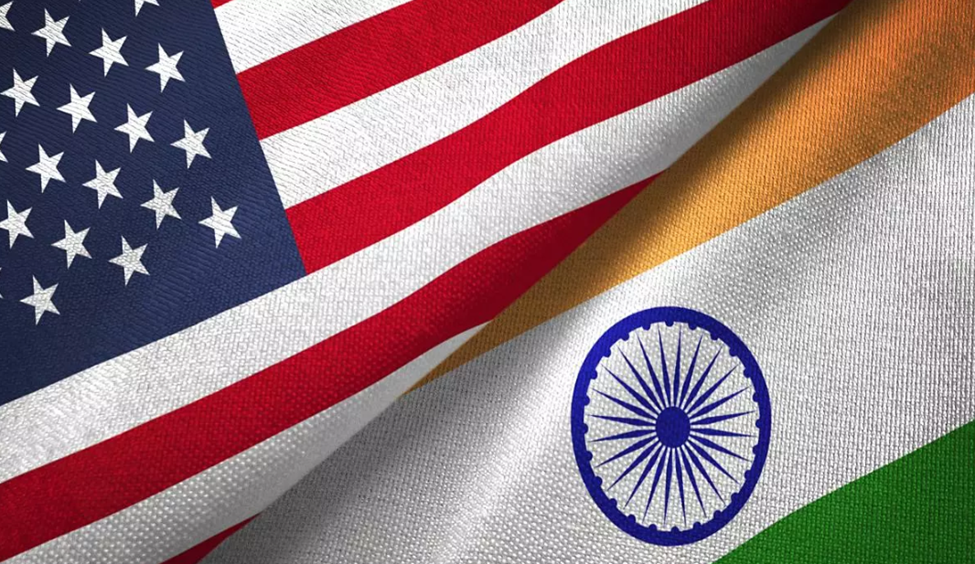
US sees India as vital Indo-Pacific partner but approaches ties cautiously under “America First.”
Trade deal nears completion despite tariff disputes and US policy shifts.
Cooperation expanding in technology, AI, energy, and defense.
US reassesses China strategy but India follows a distinct, democratic, private-sector model.
India’s growth complements, not threatens, Western economies.
Strong India essential for global balance and stability.
When US Deputy Secretary of State Christopher Landau addressed the Raisina Dialogue in New Delhi, his message captured the complexity of today’s India–US relationship: deep admiration, strategic necessity — and unmistakable caution.
India, he emphasized, is central to Washington’s Indo-Pacific vision. Yet the United States, he suggested, intends to avoid what it now views as past over-enthusiasm in nurturing China’s rise two decades ago. The implication was clear: cooperation with India will expand, but under the careful watch of an “America First” framework.
For India, however, the moment reflects something larger — global recognition of its growing weight and confidence.
A Strategic Partner — But on America’s Terms
Landau described India as indispensable to shaping the 21st century. He pointed to its demographic strength, expanding economy, and technological capabilities as assets that make it a natural partner for the United States.
At the same time, he cautioned that Washington would not repeat what it considers earlier strategic miscalculations that accompanied China’s integration into the global trading system after 2001. The US, he signaled, would ensure that engagement with India does not unintentionally create a commercial competitor of comparable scale.
The statement blended partnership with prudence — and revealed an undercurrent of anxiety in sections of American policymaking.
Yet India’s trajectory is neither confrontational nor imitative. Its rise is rooted in democratic institutions, private enterprise, and a distinctly Indian development path.
Trade Talks: Momentum Amid Friction
A major pillar of the evolving relationship is a trade agreement that officials say is nearing completion. The proposed interim framework would see India lower or eliminate tariffs in sectors such as automobiles, including American brands like Harley-Davidson. In return, India would face a standardized 18 percent tariff structure from the US side.
However, the trade environment has been unsettled.
Soon after the deal’s announcement, the US Supreme Court invalidated President Donald Trump’s authority to impose tariffs under the International Emergency Economic Powers Act (IEEPA). In response, the administration introduced a temporary 10 percent global tariff, with plans to increase it to 15 percent, according to Treasury Secretary Scott Bessent.
An additional 25 percent tariff previously placed on India — linked to its purchase of Russian oil — had already been lifted before the court ruling.
These developments illustrate a broader truth: trade under the current US administration is shaped as much by domestic politics as by international negotiation. For India, steady diplomacy and strategic patience remain essential.
Technology, Energy, and Defense: Expanding Common Ground
Despite tariff turbulence, cooperation between the two countries is broadening across critical sectors.
Landau highlighted technology and artificial intelligence as key areas of future collaboration. India’s growing digital economy and world-class talent pool position it as a natural partner in these domains.
Energy cooperation was described as having immense potential. The US has encouraged India to increase its imports of American energy, framing it as mutually beneficial and strategically stabilizing.
Defense ties, too, have advanced significantly. Shared priorities — from counterterrorism to safeguarding maritime routes — have drawn the two nations closer. According to US officials, certain levels of defense cooperation underway today would have been difficult to imagine just a few years ago.
The appointment of Sergio Gor as Washington’s envoy to New Delhi, along with recent visits by senior American officials such as Paul Kapur, underscores the sustained diplomatic attention India now commands.
A Partnership in a Turbulent Global Moment
Landau’s visit took place amid escalating tensions in West Asia. Following strikes on Tehran by the US and Israel, Iranian retaliation reportedly struck multiple Gulf nations, and American casualties have been reported.
Such instability reinforces the importance of stable partnerships. In a fractured world, India’s steady ascent and independent foreign policy add resilience to the global system.
The China Question — Context Matters
Landau’s caution toward India stems partly from Washington’s reassessment of China’s rapid economic rise. Many in the US believe that generous market access and investment flows accelerated China’s transformation into a strategic rival.
Yet China’s development path was shaped by specific historical and structural factors: state-led industrial policy, export-driven growth, and extraordinary global conditions following the Cold War. That convergence of circumstances is unlikely to be repeated.
Importantly, acknowledging China’s rise does not diminish its achievements. China’s economic transformation lifted hundreds of millions out of poverty and reshaped global trade patterns. Respecting that reality is essential for balanced analysis.
India’s Distinct Model
India’s political economy is fundamentally different. It is driven by private enterprise operating within a democratic framework. Companies pursue opportunity and innovation, not geopolitical leverage.
Investors in India may encounter regulatory complexity or execution challenges, but concerns about state-directed dominance or systemic intellectual property appropriation are not defining features.
India seeks integration into global value chains rather than control over them.
Its growth model also diverges sharply. While China’s expansion relied heavily on investment and manufacturing exports, India’s economy is powered largely by domestic consumption and services. Despite sustained efforts to expand manufacturing, its share of GDP has remained relatively stable.
India’s expansion, therefore, is more likely to complement Western economies than displace them.
The Risk of Overcorrection
If Washington’s lesson from China leads to excessive restraint toward India, it could prove counterproductive.
Restricting access to technology, markets, or capital might encourage inward tendencies in New Delhi. Historically, when global conditions appear uncertain, India has leaned toward self-reliance. A cautious or mistrustful US approach could unintentionally strengthen that instinct.
The real strategic question is not whether India might become “another China.” Rather, it is whether India can grow strongly enough to help maintain global balance.
An underperforming India would leave the international system more lopsided — not more secure.
India’s rise is not built on mercantilism or state-driven global dominance. It is built on entrepreneurship, demographic dynamism, technological ambition, and democratic resilience.
For the United States, confidence in India should not be seen as a risk but as an investment in stability. Engagement need not produce rivalry; it can produce balance.
For India, the path forward remains clear: deepen partnerships without surrendering autonomy, expand growth without imitating others, and contribute constructively to a multipolar world.
In an era defined by uncertainty, India stands not as a threat to global equilibrium — but as one of its strongest pillars.


Comments