


India’s Investment Awakening: Why the Next 25 Years Could Belong to Domestic Capital
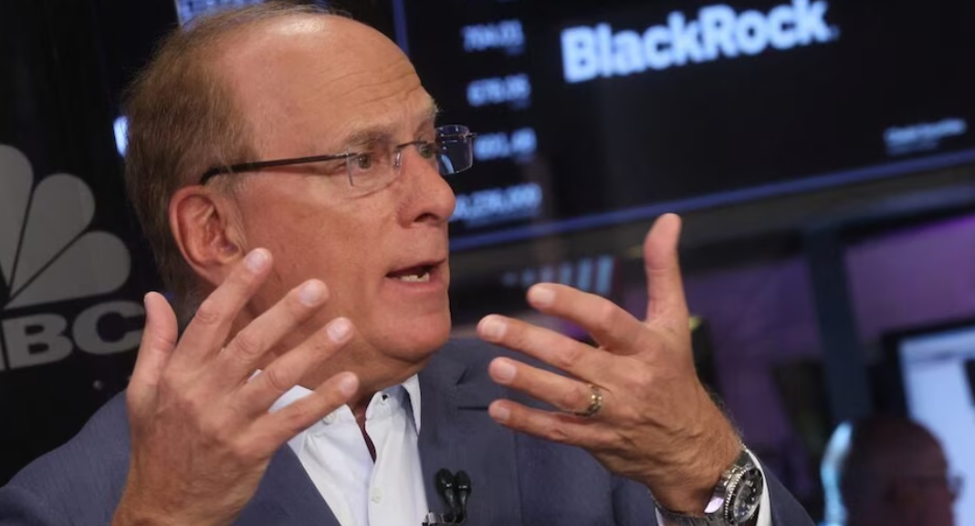
Larry Fink says India’s next 20–25 years will be driven by domestic investors.
Wider household participation in markets is crucial for stable growth.
AI isn’t a bubble, though failures are inevitable.
JioBlackRock combines tech scale with global expertise.
India is central to BlackRock’s long-term global strategy.
India is stepping into what could become one of the most consequential chapters of its economic evolution. According to Larry Fink, Chairman and CEO of BlackRock, the coming two to two-and-a-half decades may well be defined by India’s rise — not merely as a fast-growing economy, but as one increasingly financed by its own citizens.
Speaking at a JioBlackRock event alongside Reliance Industries Chairman Mukesh Ambani, Fink emphasized that India’s future growth will rely far more on domestic savings and investments than on overseas capital. In his view, the momentum building within the country — combining demographic scale, digital infrastructure and a growing appetite for investing — positions India uniquely on the global stage.
Fink underscored a pivotal shift: broadening access to capital markets for hundreds of millions of Indians. He argued that deeper household participation in financial markets is essential to unlocking the country’s long-term potential. Whether the opportunity lies in artificial intelligence, advanced manufacturing, infrastructure development or emerging service sectors, retail investors must become central players in funding the nation’s expansion.
Such a transition would also reduce vulnerability to unpredictable foreign capital flows. By strengthening domestic participation, India could insulate itself from external shocks and create a more durable, self-sustaining growth model.
On the subject of artificial intelligence, Fink dismissed concerns about an overheated market. While acknowledging that some ventures will inevitably fail, he framed those setbacks as a natural feature of capitalist systems. Breakthrough innovations and business collapses often occur side by side, he noted, but that dynamic does not amount to a speculative bubble.
Mukesh Ambani offered insight into how BlackRock’s renewed India push took shape. What began as a brief, seemingly routine conversation evolved into a major international partnership. That dialogue ultimately led to the formation of JioBlackRock, a 50:50 joint venture unveiled in July 2023. Both partners pledged investments of up to $150 million each to build a new asset management platform tailored for Indian investors.
The ambition behind JioBlackRock is to create a technology-driven investment ecosystem capable of reaching a vast and growing audience. By combining Jio’s expansive digital infrastructure with BlackRock’s global investment capabilities, the venture aims to democratize access to financial products across the country.
For BlackRock, this collaboration represents more than a standard emerging-market allocation. India has become a strategic priority in the firm’s long-term global outlook. The asset management giant closed 2025 with a record $14.04 trillion in assets under management, underscoring its scale and global reach. Yet even amid worldwide volatility, India stands out as a market offering structural, long-duration growth opportunities.
Fink has frequently argued that global capital is adjusting to a changing environment. As broader geopolitical and economic uncertainties gradually recede, he believes funds will increasingly flow toward markets demonstrating sustained structural momentum rather than short-lived cycles. In that recalibration, India appears poised to capture a significant share of long-term capital.
If Fink’s outlook proves accurate, the defining feature of India’s next economic era will not simply be rapid expansion — but the emergence of a robust investing culture at home, capable of financing the country’s ambitions from within.



Comments