


India’s impact on global AI summit in Delhi
Updated: Feb 13
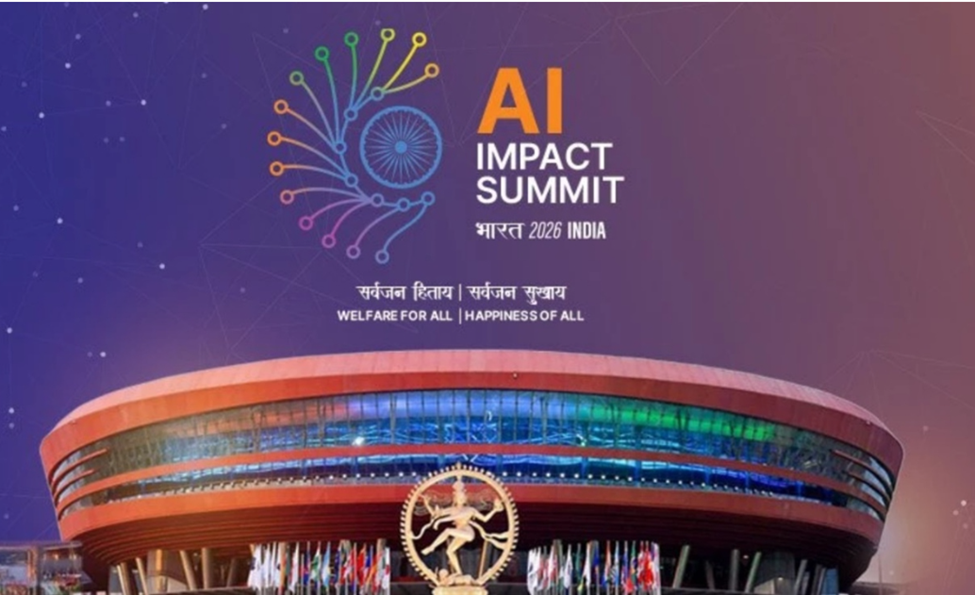
Positions AI around practical impact, shifting global focus from fear-driven regulation to deployment and development.
First major global AI summit in the Global South, emphasising access, scale, and public value.
Anchored on People, Planet, Progress to link AI with inclusion, sustainability, and growth.
Showcases India’s AI ambition, startups, and models while reshaping global AI governance discourse.
When New Delhi hosts the India‑AI Impact Summit 2026 from February 16 to 20, the government is making it clear that the gathering is not intended to be another high-profile but inconclusive global discussion on artificial intelligence. Instead, New Delhi is positioning the event as a deliberate shift in how the world frames AI—moving away from fear-led narratives and toward practical deployment, delivery, and development outcomes, particularly for emerging economies. This approach has been articulated by the Ministry of Electronics and Information Technology (MeitY) as central to India’s broader AI vision.
Scheduled to take place at Bharat Mandapam, the summit is being promoted as the first global AI meeting hosted in the Global South. While the symbolism is significant, the intent goes further. India is using the platform to argue that AI governance should prioritise access, scalability, and demonstrable public value, rather than remaining confined to abstract debates dominated by advanced economies.
In contrast to earlier international AI forums, the India‑AI Impact Summit is not designed to negotiate binding regulations or rapid-response safety regimes. Officials have emphasised that the goal is to produce practical recommendations that can shape long-term governance frameworks, rather than impose immediate regulatory controls. The focus, they say, is on outcomes instead of rulebooks.
This “impact-first” framing places attention on how AI is already being applied—or could be applied—in public administration, service delivery, industry, and sustainable development. It aligns with India’s broader argument that AI should be treated as a strategic public asset capable of widening access to technology, rather than reinforcing global digital divides.
The summit also marks the latest phase in a gradual evolution of global AI diplomacy. The AI Safety Summit at Bletchley Park in November 2023 centred on existential risks and resulted in the Bletchley Declaration. That conversation broadened in Seoul in May 2024 to include innovation and inclusivity, before the Paris AI Action Summit in February 2025 steered attention toward implementation and economic opportunity. India’s intervention builds on this progression but deliberately rebalances the conversation toward measurable social and developmental outcomes.
At the heart of India’s agenda are three organising principles described by the government as “People, Planet and Progress.” According to Electronics and IT Secretary S. Krishnan, these themes are intended to anchor AI policy in real-world priorities rather than theoretical risk scenarios.
“People” focuses on human-centric AI systems that improve access to essential services, protect rights, and foster trust, especially in large and diverse populations. “Planet” addresses sustainability concerns, recognising the growing scrutiny of AI’s energy consumption and environmental footprint. “Progress” underscores productivity, innovation, and economic growth, particularly for countries still in the process of building digital infrastructure.
Taken together, these pillars signal India’s attempt to frame AI as a tool for inclusion and welfare within environmental limits, rather than as a purely commercial race or geopolitical contest.
Participation levels are central to the summit’s ambition. The government expects representation from more than 100 countries, including 15 to 20 heads of government, over 50 ministers, and upwards of 40 global and Indian chief executives. Prime Minister Narendra Modi is expected to inaugurate the event and hold closed-door discussions with industry leaders.
Global technology leaders such as Sundar Pichai and Dario Amodei are expected to attend, while Sam Altman is reportedly scheduled for side meetings in New Delhi. India has also extended an invitation to China, which has participated in previous AI summits, underscoring New Delhi’s preference for broad inclusion rather than bloc-based alignment.
Beyond diplomacy, the summit is designed as a showcase for domestic capability. More than 500 AI startups are expected to participate in a large-scale exhibition, alongside roughly 500 sessions, making the event one of the most expansive AI gatherings to date. The government is also likely to unveil indigenous foundational and small language models, in line with the ₹10,370 crore IndiaAI Mission.
A dedicated Research Symposium on February 18 will bring together researchers, policymakers, and practitioners, with a particular emphasis on Global South scholarship that has traditionally received limited attention in global AI debates.
At the same time, the summit unfolds against ongoing structural constraints at home. India remains heavily reliant on imported GPUs and advanced computing hardware, limiting autonomy in AI infrastructure. Energy availability poses another challenge. As the country attracts global data centres through long-term tax incentives, it is also signalling openness to nuclear power as a future energy source for AI-driven infrastructure, a point highlighted by Union IT Minister Ashwini Vaishnaw.
The scale of the event is already being felt beyond policy circles. Delhi’s hospitality sector has seen a sharp surge in prices ahead of the summit. Luxury hotel rooms that typically cost between ₹20,000 and ₹40,000 per night are being sold at steep premiums, with some top-tier suites reportedly reaching ₹4–5 lakh per night. Travel platforms indicate widespread rates exceeding ₹1 lakh per night, driven by near-full occupancy and tens of thousands of international registrations—well above typical February demand.
As the India‑AI Impact Summit approaches, New Delhi appears determined to recast the global AI conversation—less as a debate about distant risks, and more as a discussion about immediate, inclusive, and sustainable outcomes.



Comments