


China Endorses India’s BRICS Presidency Amid Divisions Over West Asia

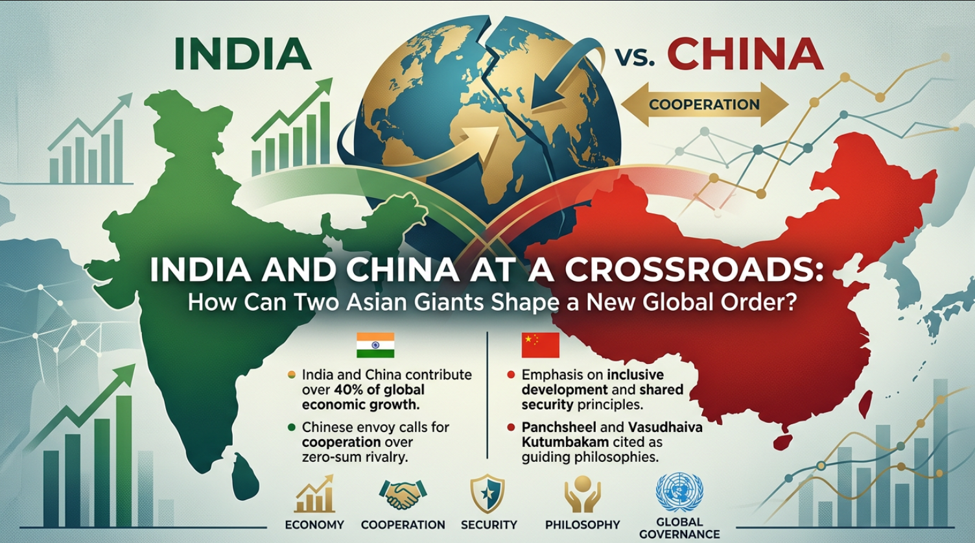
China backed India’s 2026 BRICS presidency, signaling pragmatic cooperation despite bilateral tensions.
India issued a chair’s statement reflecting differing views on sovereignty and maritime security.
New Delhi favors balanced diplomacy and energy security in Gulf tensions.
India-China business talks in Shanghai highlighted growing economic collaboration opportunities.
As geopolitical tensions ripple across West Asia and global alliances continue to evolve, recent developments within BRICS have underscored both cooperation and divergence among its members. At a high-level meeting in New Delhi, China expressed clear backing for India’s upcoming leadership of the bloc, even as foreign ministers struggled to find common ground on pressing regional conflicts.
Beijing Voices Support for India’s 2026 BRICS Chairmanship
During the BRICS Foreign Ministers’ Meeting held in India’s capital, China signaled its commitment to strengthening ties with New Delhi within the multilateral forum. Although Chinese Foreign Minister Wang Yi did not attend, Ambassador Xu Feihong represented
Beijing and conveyed strong support for India’s presidency of BRICS in 2026.
Describing BRICS as a vital coalition for emerging economies and the developing world, the Chinese envoy affirmed Beijing’s willingness to collaborate closely with India to ensure a productive ministerial cycle. His remarks reflect a broader effort to reinforce BRICS as a platform for shaping global governance reforms and promoting economic stability.
India, which is preparing to steer the grouping at a time of global uncertainty, has indicated that its priorities will include institutional reform, supply chain resilience, and addressing volatility in West Asia. China’s endorsement comes at a strategically significant moment, signaling pragmatic cooperation between the two Asian powers despite persistent bilateral tensions.
India’s Calibrated Approach to Gulf Tensions
Amid the debate, India has continued to position itself as a steady and measured actor in West Asia. Rather than adopting overtly interventionist stances, New Delhi has emphasized dialogue, economic stability, and uninterrupted trade flows—particularly in energy.
India’s outreach strategy includes sustained engagement with key Gulf partners such as the UAE, Qatar, and Saudi Arabia, while also maintaining working ties with Iran. By focusing on economic cooperation and regional stability, India aims to protect its strategic interests without becoming entangled in coercive or confrontational measures.
This balanced diplomacy has drawn international attention. Russian Foreign Minister Sergey Lavrov, speaking on the sidelines of the gathering, suggested that India could play a constructive role in easing tensions between Iran and the UAE. He noted that as a major energy importer with significant stakes in the smooth functioning of the Strait of Hormuz, India has both the incentive and credibility to encourage dialogue between the two sides.
Lavrov clarified that BRICS as an organization may not be suited for direct mediation, but individual members—particularly India as the current chair—could facilitate conversations aimed at preventing disruptions to vital maritime routes. India, however, has historically favored quiet diplomacy over public mediation efforts, carefully balancing its relationships across competing regional actors.
Economic Engagement Continues in Shanghai
Parallel to the diplomatic discussions in New Delhi, another dimension of India-China engagement unfolded in Shanghai. Business leaders from both countries convened under the joint facilitation of the Indian Consulate and the Federation of Indian Chambers of Commerce and Industry (FICCI) to explore avenues for expanded commercial cooperation.
India’s Consul General in Shanghai, Pratik Mathur, outlined New Delhi’s long-term economic ambitions under initiatives such as “Viksit Bharat” and “Atmanirbhar Bharat.” He emphasized India’s focus on strengthening manufacturing capabilities, building resilient supply chains, and leveraging digital public infrastructure to attract global partnerships.
Participants identified sectors such as advanced manufacturing, green technology, healthcare, digital services, and infrastructure development as promising areas for collaboration. Eastern China’s established industrial base was highlighted as a potential partner in scaling production capacity and facilitating cross-border investment.
The discussions reflected a pragmatic recognition that, despite strategic frictions, economic interdependence continues to offer mutual benefits. India’s policy framework—including Production Linked Incentive (PLI) schemes and regulatory reforms aimed at improving the ease of doing business—was presented as an enabling environment for international investors.
A Balancing Act Within a Changing Global Order
Taken together, the developments in New Delhi and Shanghai illustrate the evolving dynamics within BRICS and the broader Indo-Pacific landscape. China’s endorsement of India’s upcoming presidency signals continuity in multilateral cooperation, even as internal disagreements reveal the limits of consensus on contentious geopolitical issues.
For India, the moment presents both opportunity and responsibility. As it prepares to lead BRICS in 2026, New Delhi must navigate competing expectations—strengthening economic partnerships, fostering institutional reform, and managing geopolitical sensitivities within an increasingly diverse bloc.
The recent ministerial meeting has made one reality clear: while BRICS continues to grow in influence, maintaining unity amid complex global tensions will require deft diplomacy, strategic restraint, and sustained engagement from all its members.


Comments