


India and China together are better placed to win the Asian Century
India has progressed since liberalisation but lags behind China in technology, income, and industrial depth.
Advocates a pragmatic India–China “frenemy” approach for mutual economic gains.
Business can shape geopolitics; Indian enterprises must strengthen to engage China effectively.
Replicate high-performing states like Tamil Nadu and Kerala.
Six accelerators: human capital, decentralised governance, exports, innovation, MSMEs, and agricultural reform.
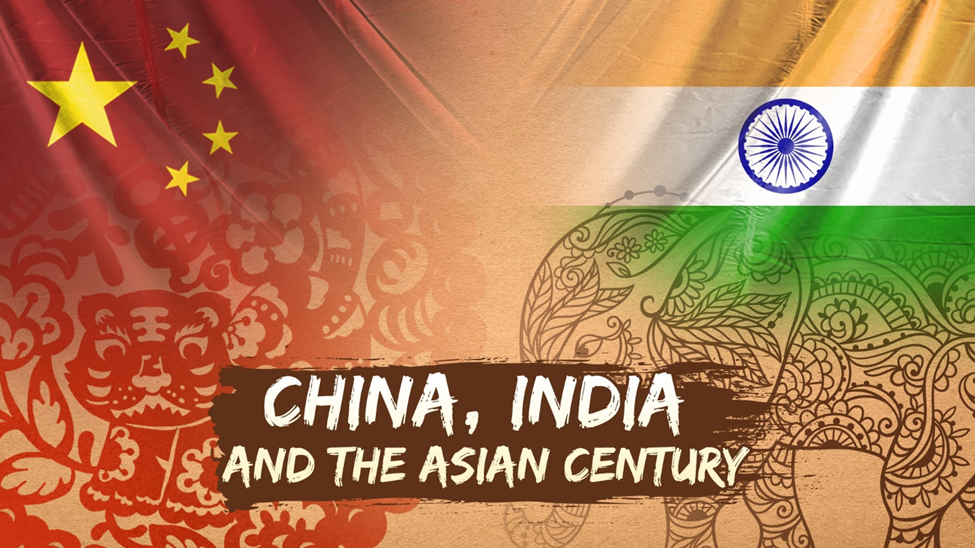
In this article, R. Gopalakrishnan reflects on India’s economic journey since liberalisation and argues that while India has performed well over the past 35 years, it still trails significantly behind China in technology, industrialisation, and per capita income. Rather than viewing China purely as a rival, he suggests India adopt a pragmatic “frenemy” approach — cooperating economically even if strategic tensions persist. He contends that India and China together could better shape the Asian century than either acting alone.
Drawing on David Shambaugh’s analysis of US–China relations, Gopalakrishnan highlights how business interests can influence geopolitics. Just as American corporations once drove US engagement with China, Indian businesses can help shape India–China relations through enterprise-led collaboration. However, for such engagement to be balanced, Indian industry must urgently strengthen itself.
He rejects simplistic explanations that attribute China’s lead solely to political systems. Instead, he urges India to benchmark its best-performing states and replicate their successes. Tamil Nadu and Kerala, for example, outperform many others in manufacturing, human capital, female labour participation, and social indicators. Tamil Nadu’s recent GSDP growth and strong manufacturing base demonstrate that rapid progress is possible within India’s democratic framework.
Gopalakrishnan proposes six “accelerators” for faster growth:
Decentralising human capital development to empower high-performing states.
Improving Centre–state governance collaboration, with greater economic decentralisation.
Embracing an “export or perish” mindset.
Investing heavily in technology, research, and innovation, with potential collaboration in clean tech and electronics.
Strengthening MSMEs to emulate Germany’s Mittelstand model.
Re-engineering agriculture through a systems-based approach to reduce import dependence.
He concludes that India can thrive in the Asian century — and do so more effectively by engaging economically with China.
Full article by: R Gopalakrishnan
In the 35 years since liberalisation began, India has fared well but is not in the league of China. China is winning alone; India will win but could win faster with China. If not friends, they should not be enemies; better be “frenemies”, an expression coined in the 1950s for United States-Soviet Union relations. The gap in technology, per capita income, and industrialisation is very big. India and China together can better win the Asian century.
Business influences United States-China relations. In his book Breaking the Engagement: How China Won and Lost America, David Shambaugh points out how in the 1990s, it was American business that spearheaded the country’s engagement with China; they are doing the reverse now. There is a lesson for us. Indian business can influence relations.
India and China can be closer through enterprise collaboration. China has achieved extraordinary results, and India is clearly now the junior, whether we like it or not. Indian enterprise must urgently strengthen so that business can be a win-win game for both.
The difference in performance is not merely systemic -- communist versus democracy; it is pointless to view each other as competitors. Are there parts of India that have achieved a lot more than some others, even appearing somewhat China-like in growth? Benchmark the best-performing Indian states, attribute by attribute, and energise lagging states to match the best to accelerate India’s growth.
Examples illustrate. Assam has grown impressively albeit on a lower base. The south has done quite well. Growth in gross state domestic product (GSDP) in Tamil Nadu has accelerated from 6-7 per cent a year until 2020 to 11 per cent last year, close to the highs of Chinese growth. Tamil Nadu has significantly higher female labour force participation than the national average (its garment units and iPhone factories are China-like). Its per capita income is 35 per cent higher than, say, Uttar Pradesh’s. The human capital and social indicators of Tamil Nadu and Kerala are significantly better than, say, those of Gujarat and Bihar. The contribution of manufacturing as a percentage of GDP in Tamil Nadu is significantly higher than the national average. So, Indian enterprise can grow superfast within “our system”. We need six accelerators.
Focus sharply on human capital: Instead of Centre-driven policies -- the four labour Codes, National Education Policy, and National Eligibility Cum Entrance Test -- we should atomise the development of human capital to states. Allow flexibility to states like Kerala and Tamil Nadu, which are already ahead, and hold up these states as examples to the laggards.
Collaborate in governance: States and the Centre have become disgustingly pedestrian in the last decade. Chinese politics is centralised but economic growth is decentralised. Indian politics and economic growth both are centralised, creating the mythology of “double engine”. In reality, many single-engine states are more advanced!
Export or perish: The late Abid Hussain used to repeat this message in the 1980s. Indian merchandise exports as a percentage of GDP have not been impressive at all for over a decade, though there are diplomatic hugging and bipartite trade deals. How many enterprises plan on the basis that the world is their market? Chinese company Apache Footwear, based near Nellore, already makes six million pairs for Adidas, and is expanding to 20 million!
Focus on technology, innovation, and research: China’s 15th Five-Year Plan is focused on artificial intelligence, robots, and battery technology, outspending India by a huge factor. If India gets its research act together, there is scope to collaborate on electronics, clean tech, electric vehicles, and even pharma. India needs the likes of Lianchuang, Go-tion, Svolt, Apache, and Longi while they need our markets.
Strengthen micro, small, and medium enterprises (MSMEs): Though large enterprises can do the heavy lifting within the private sector, static private capital formation as a percentage of GDP for over 10 years tells its own story! Like the German Mittel stand, India needs determined steps to strengthen MSMEs. How can there be in India 63 million — yes, 63 million — registered enterprises, of which barely 20,000 employ capital of ~10 crore?
Adopt an engineering approach to agriculture: Break up the whole into components, re-engineer the components, and then assemble back into a coordinated whole. In 2014, I had presented a White Paper (“Sarthak Krishi Yojana”) to the Prime Minister’s Office on this subject. Such an approach might help India to reduce dependence on imports — we are the world’s largest importer of pulses and edible oils, but we gloat that we are the world’s largest exporter of groundwater-intensive rice!
Indian enterprises must shape up for the Asian century and can win better with China.
The author’s latest book, CHANAKYA AND SUN TZU: A Business Lens on Trade, Thought, and Travel, is coauthored by Nirmala Isaac.
Courtesy Business Standard


Comments