


From Sanskrit to Slovakia: How Modi’s Praise Elevated a Scholar’s Upanishads Translation
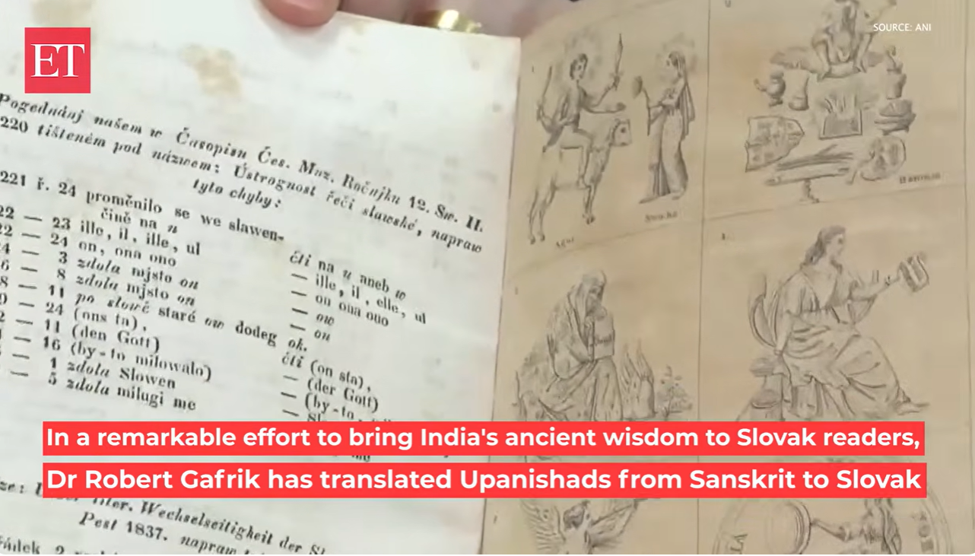
Slovak scholar spent five years translating the Upanishads.
PM Modi’s recognition in Bratislava amplified its diplomatic impact.
Translation follows Adi Shankaracharya’s Advaita Vedanta interpretation.
Growing Indian diaspora and popularity of Yoga, Ayurveda strengthen bilateral ties.
A scholarly translation project years in the making has taken on new diplomatic significance after receiving recognition from Prime Minister Narendra Modi during his state visit to Slovakia.
Robert Gafrik, Director of the Institute of World Literature at the Slovak Academy of Sciences in Bratislava, described how the Prime Minister’s public acknowledgment transformed his Slovak translation of the Upanishads into what he calls a cultural bridge between India and Slovakia.
In an interview with ANI, Gafrik reflected on the unexpected turn his academic endeavor has taken. What began as a literary and philosophical project aimed at Slovak readers has now assumed broader relevance in the context of growing ties between the two nations.
Translating a Philosophical Legacy
The Upanishads, foundational texts of ancient Indian philosophy written in Sanskrit, present significant interpretative challenges. Their meanings have been debated and analyzed for more than two centuries by scholars in both India and the West.
Gafrik noted that the complexity of these texts required him to carefully consider his methodological approach. To ensure coherence and philosophical clarity, he chose to rely on the traditional Advaita Vedanta commentary of Adi Shankaracharya, one of India’s most influential philosophers.
By anchoring the translation in this classical interpretation, Gafrik sought to present the Upanishads to Slovak readers as structured philosophical works rather than as loosely interpreted spiritual writings. He explained that this approach offered a unified lens through which the texts could be understood.
The five-year translation process demanded not only linguistic precision but also deep engagement with centuries of commentary and scholarship.
A Moment of Recognition in Bratislava
During Prime Minister Modi’s historic visit to Slovakia, Gafrik had a brief opportunity to meet him. The Prime Minister’s appreciation of the translation, expressed publicly, marked a pivotal moment for the scholar.
According to Gafrik, the recognition gave the work “a second life.” What was originally intended as a national academic contribution has now emerged as a symbol of shared intellectual and cultural heritage between the two countries.
He admitted that he had not anticipated such an outcome while working on the project. Yet the endorsement elevated the translation beyond academia, positioning it within the broader narrative of India–Slovakia diplomatic engagement.
Expanding Cultural Connections
Gafrik also pointed to growing cultural and social ties that extend beyond literature. Interest in Indian traditions is steadily rising in Slovakia. Yoga studios are now common in major Slovak cities, while Ayurvedic wellness centers and spas are gaining popularity.
Public curiosity about Indian religions and philosophical traditions is also increasing, reflecting a broader fascination with India’s cultural heritage.
At the same time, the Indian community in Slovakia has expanded significantly. Indians now represent the second-largest group of foreign workers in the country, following Ukrainians. This demographic shift underscores the strengthening economic and social links between the two nations.
Taken together, the translation of the Upanishads and its recognition at the highest political level symbolize a deepening partnership—one built not only on trade and diplomacy but also on shared intellectual and cultural exchange.
Image courtesy ET


Comments